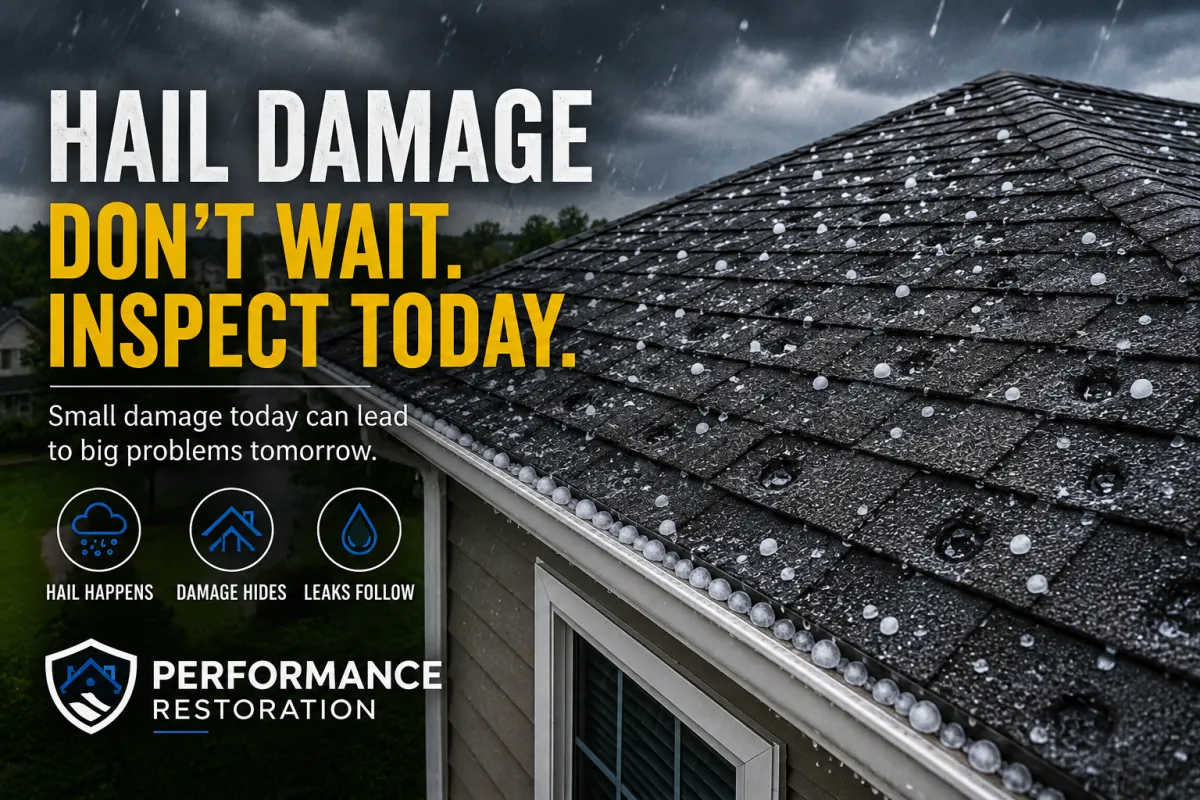
Hail Damage to Your Roof: What Kansas City Homeowners Can't See From the Ground
The storm passed. Your roof isn't leaking. You figure you got lucky.
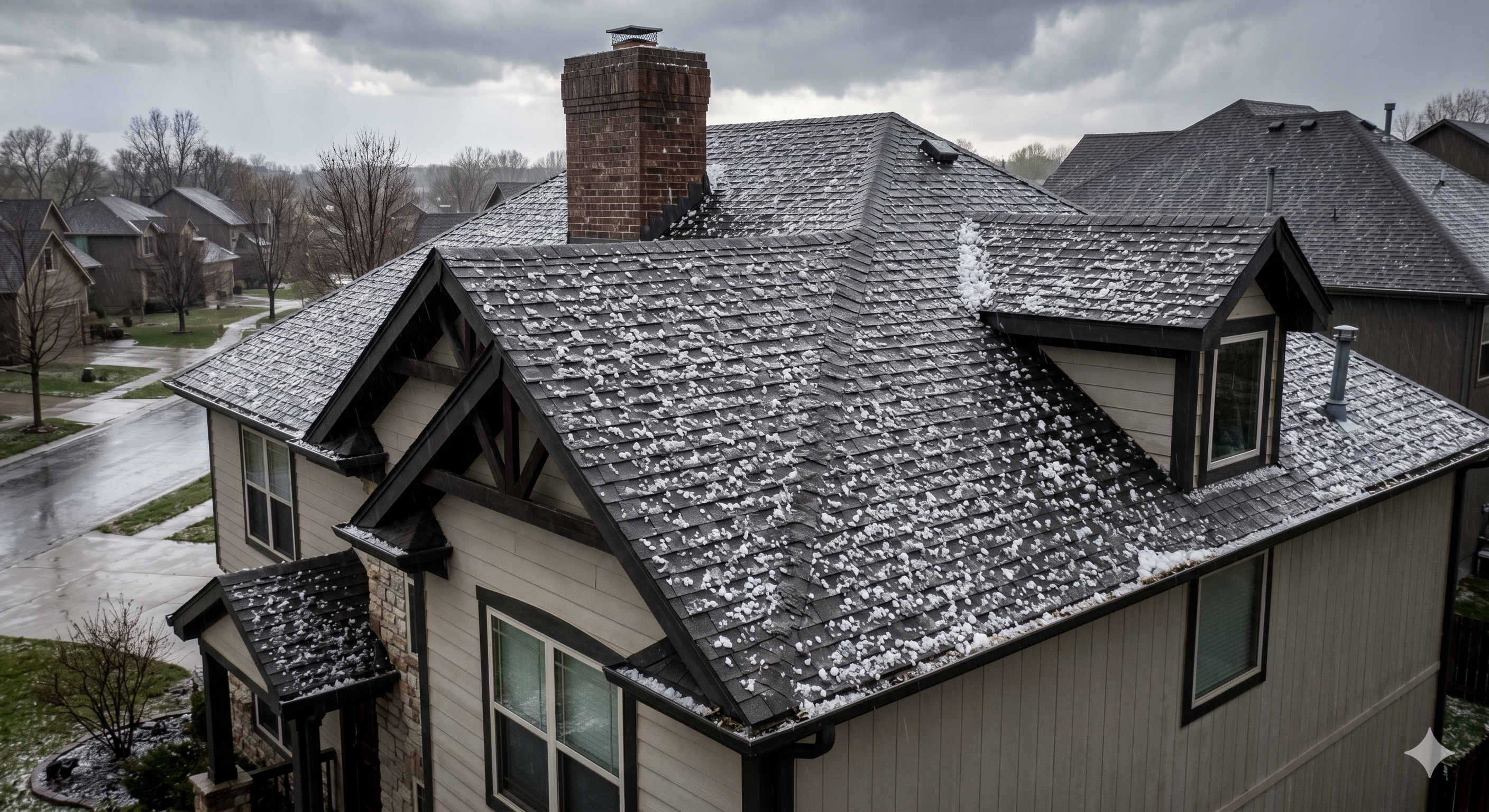
That's the moment most Kansas City homeowners make a very expensive mistake.
Hail damage to a roof is one of the most deceptive forms of home damage there is. The harm happens immediately, but the evidence shows up on a delay, sometimes weeks or months after the storm. By the time water spots appear on your ceiling, the damage has spread far beyond what triggered it.
Here's what's actually happening inside your roof after a hailstorm, and why a clear sky after a storm is not the same thing as a clean bill of health.
Why Hail Damage Is Rarely Obvious from the Ground
Asphalt shingles are designed to look intact even when they aren't. The visible surface of a shingle is made up of mineral granules, tiny particles of crushed stone that protect the underlying asphalt mat from UV rays and moisture.
When hail hits a shingle, even a small stone moving at speed, it dislodges those granules. The shingle still looks like a shingle. It's still lying flat. It isn't cracked. But the protective layer is gone. What's left is exposed asphalt, which UV rays will now break down within weeks.
That exposed mat begins cracking. The crack is tiny at first, but water finds tiny cracks. One good rain and you have infiltration. Two months later, you have a water stain on your living room ceiling and a repair estimate that's significantly larger than it would have been right after the storm.
What a Trained Eye Sees That You Can't
Professional hail damage inspections look for things that aren't visible from a ladder, let alone from the street. At Performance Restoration, our inspection process checks for:
Granule displacement patterns consistent with hail impact (not just normal wear)
Soft spots or bruising on shingles where the mat has been compromised
Damaged flashing around chimneys, vents, and valleys where hail hits at angles
Dented or cracked ridge caps, which take some of the hardest hail hits
Damage to gutters and downspouts that indicates hail size and trajectory
Evidence of concentrated impact zones based on storm direction
The size of the hail matters less than many homeowners think. Quarter-size hail falling at an angle in 40 mph winds hits harder than baseball-size hail in still air. That's why a 'minor' storm sometimes causes more damage than a dramatic one.
The Kansas City Hail Reality
Our region sits in the edge of what meteorologists call the central plains hail corridor. Jackson County, Johnson County, Clay County, and Platte County all receive significant hail activity every spring and summer. Communities like Lee's Summit, Olathe, Overland Park, Liberty, and Raytown experience multiple hail events most years.
What makes Kansas City unique is the angle and combination. We frequently get hail alongside high winds, which multiplies impact energy. We also tend to get storms in clusters, meaning a roof already weakened by one storm gets hit again before anyone has had a chance to inspect it.
Your Insurance Clock Is Running
This is the part most homeowners don't know until it's too late.
Most homeowner insurance policies in Missouri and Kansas require you to file a storm damage claim within one year of the storm event, though some policies are shorter. Beyond that window, insurers can and do deny claims on grounds that the damage is too old to assess accurately.
A delay of even a few months after a major storm can leave you paying for repairs out of pocket that would have been fully covered. A professional inspection creates a documented record of the damage and its connection to a specific storm event, which is exactly what your adjuster needs to process a legitimate claim.
What to Do in the 72 Hours After a Hailstorm
Document any visible exterior damage with photos, including to vehicles, AC units, and patio furniture
Do not attempt to get on the roof yourself, wet shingles and compromised edges are serious fall hazards
CertainTeed ShingleMaster™certified roofing contractor for a professional inspection
Notify your insurance company that you're having an inspection done
Keep the inspection report, it becomes part of your claim documentation
The inspection costs you nothing at Performance Restoration. What you learn from it could save you thousands.
Schedule your free post-storm hail inspection with Performance Restoration. CertainTeed ShingleMaster™certified roofing contractor. Serving the entire Kansas City metro area in Missouri and Kansas. Call (816) 237-0504 or visit performanceroofingpros.com.
